
How Long Does It Take to Go from Beginner to Intermediate in Tennis as an Adult?

One thing I love about adult tennis is that it's an open forum on international skills and life improvement. Heart healthy, full body workout, motor and coordination skills, decision-making that bleeds into real life, emotional control, and longevity. You can start late and play into old age. Few sports offer that.
But your goal is yours alone. So before answering how long it takes, you need to decide what you actually want from the game. For this article, let's say you want to improve fast — play matches with friends, join a club, clinic, or league. That's a clear target. Let's work backwards from there.
New to tennis entirely? Start with our free adult beginner video course before working on positioning.
What "intermediate" actually means
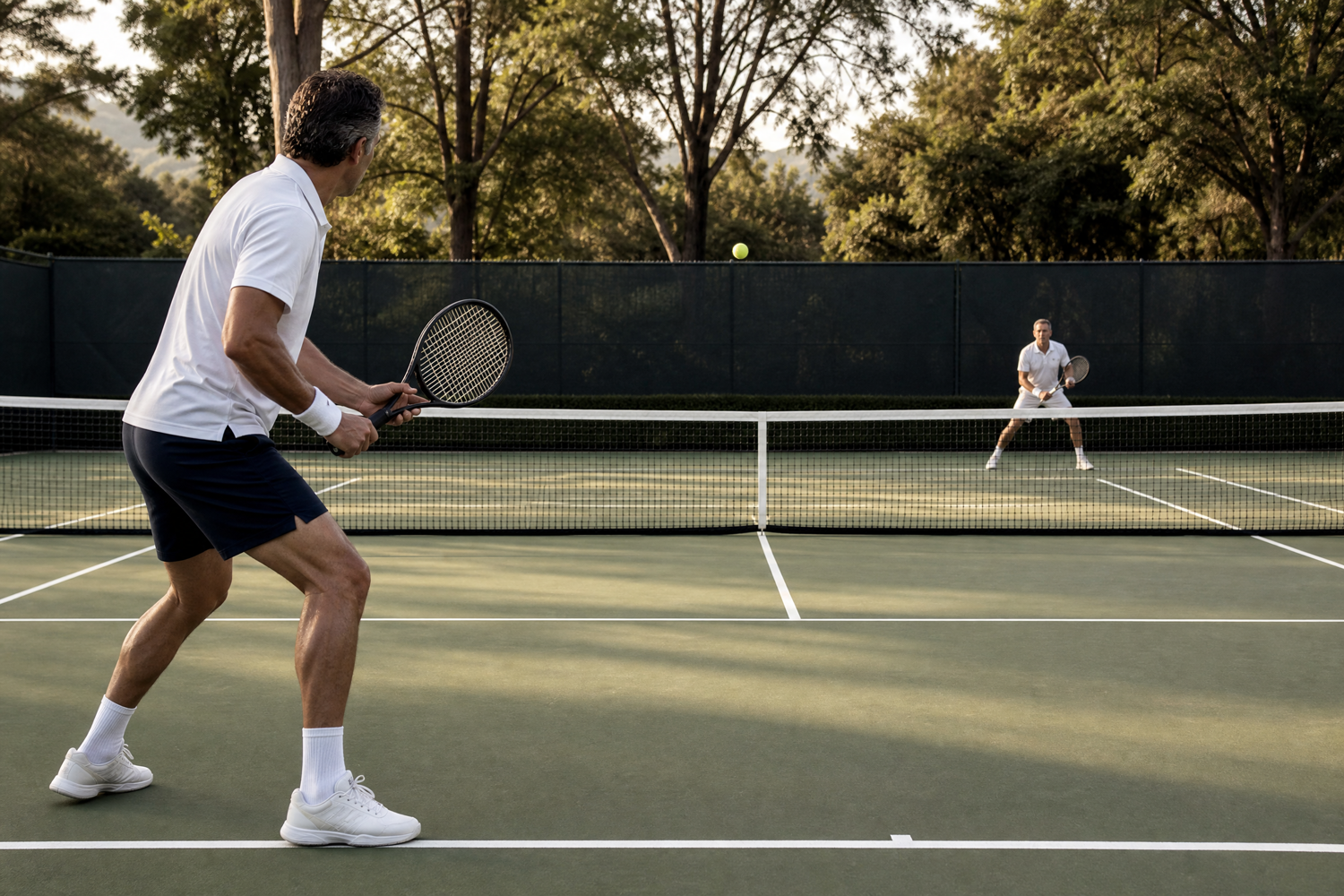
Across the world, intermediate adult players share a recognisable set of skills. They rally deep balls consistently. They use a continental grip on serve, move the serve around the box, and have a different first and second serve. They generate real power on groundstrokes, play volleys decently, understand and implement basic strategy, and recover after every shot.
They also know how to keep score — and call it out. Players always notice when you don't. They go quiet at serve time.
They call balls out that are out. They don't intercept balls from the baseline out of the air — groundstrokes bounce first. They keep the ball deep, because if your opponent is standing in no man's land waiting for your shot to land, that's a tell. Hit long before you hit into the net. By intermediate level, net balls should be an afterthought, not the norm.
Grip changes matter too — forehand to backhand, forehand to serve. Coaches watch for this. And we watch depth. If the middle of no man's land is your home base, that's not a good look.
What actually determines your timeline
Three sessions a week — with a coaching component and supplementary play with other players — is the realistic path from beginner to intermediate. With some built-in athleticism or hand-eye coordination, a year is achievable. Without it, allow more.
But it's not just frequency. The players who get there are the ones who commit. They find a coach and take private lessons. They play in clinics. They find a wall to practice their serve toss — because the toss is harder than it looks and no one tells you that early enough. They look for other players to hit with between lessons.
One piece of advice I always give players paying for private lessons: tell your coach to teach you like you're about to join a league. That way, you learn basic strategy alongside your forehand. You immediately understand why you hit crosscourt — and when to go down the line.
One more thing: the tennis slump is real. Nobody's immune. You'll progress fast and then hit a wall. Take a couple of weeks away and let it settle into your subconscious. When you come back, it often feels easier — and then you can work toward your next goal. This game is not a sprint.
What's quietly holding most adult beginners back
The wrong coach. Not necessarily a bad person — often a great tour player or former D1 college player who simply can't translate their game to an adult learner with different time constraints, different learning patterns, and a completely different relationship with failure.
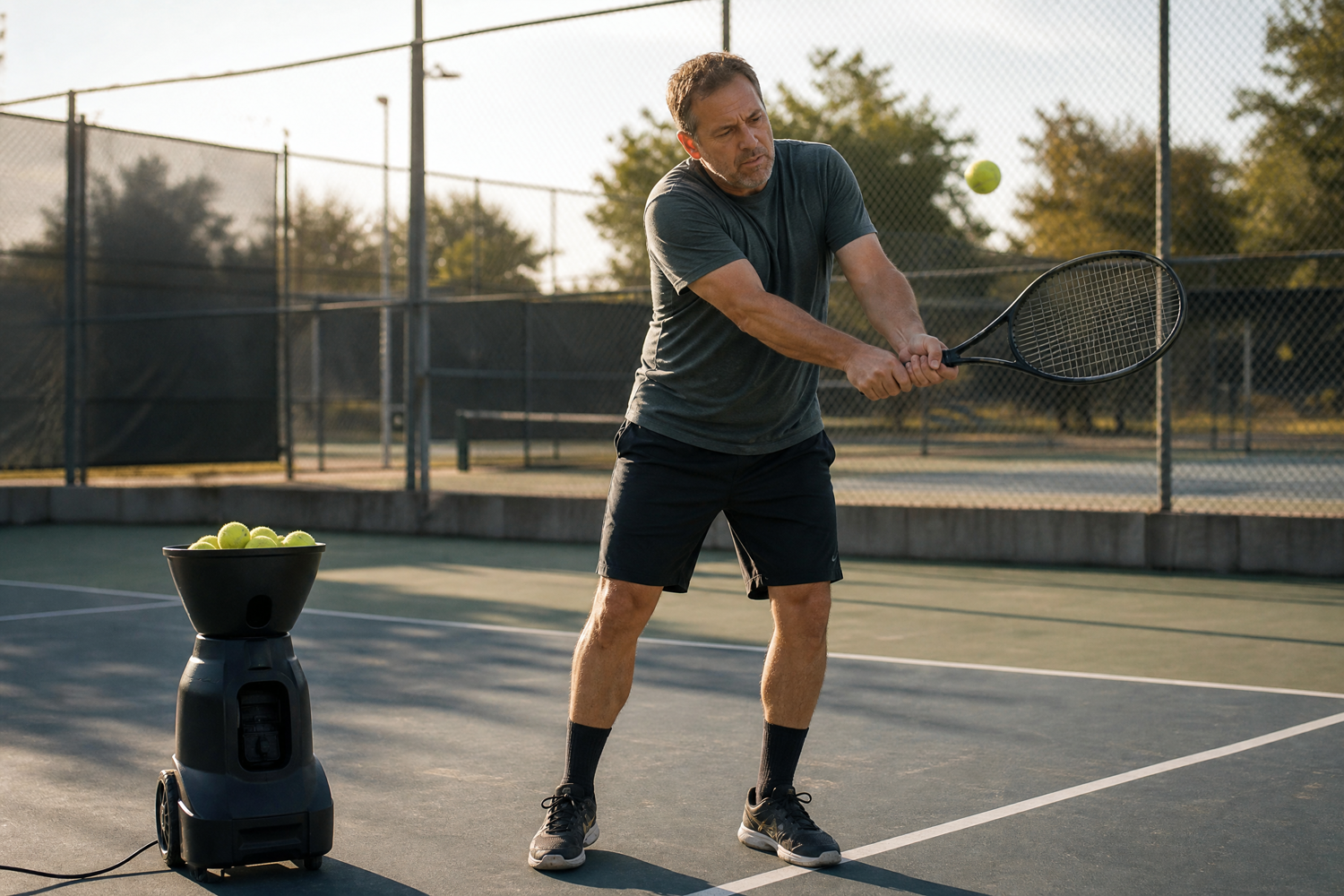
Also this: don't rent a ball machine and groove in wrong foundations without a trained eye on you. Not your husband. Not your playing buddy. Someone certified who understands adult development.
And don't skip the grips. Most players who plateau at basic intermediate never moved past it because they didn't want to learn the toss properly, never picked up a second grip for the backhand or serve, and spent years playing doubles at the net in a forehand grip — every ball dripping into the net. The game will push your comfort level. You have a lifetime. Learn it well.
A realistic timeline
6–12 months: Solid foundation if you're practicing consistently with coaching
12–18 months: Playing real points, serve becoming reliable
2–3 years: Genuine intermediate if you've practiced smart and played matches
How to get there faster

Find a coach who is in it with you. Someone who knows you, loves working with adults, and shows up for your progress as much as you do. That's not always easy to find — but it changes everything.
Immersive formats compress progress significantly. A coaching camp with structured daily tennis and live match play gives you in a week what monthly lessons spread over months can't replicate. At Costa del Tennis we work with improver and advanced beginner levels — structured, small group, match play included. If you're a true beginner, the Rafa Nadal Academy runs year-round beginner programmes across multiple locations (Mallorca, Cancun Mexico & Dominican Republic) - use code Indietenis or Costadeltennis for a discount. It’s genuinely worth exploring. You can get an honest read on what it’s like here.
And as soon as you can — join a league. At USTA 2.5 (advanced beginner level), you're eligible. Do it. The match experience, the culture, the players you meet, the extra court time — it accelerates everything that lessons alone can't.
One last thing
Progress in tennis as an adult is nonlinear. You'll plateau. You'll wonder if you've stopped improving. You haven't. The goal isn't speed — it's not quitting during the plateau.
This is the sport you can take up at 40 and still be playing at 75. Give it the time it deserves.