
Tennis Grips for Adult Beginners: Start Here If You Want to Rally Sooner
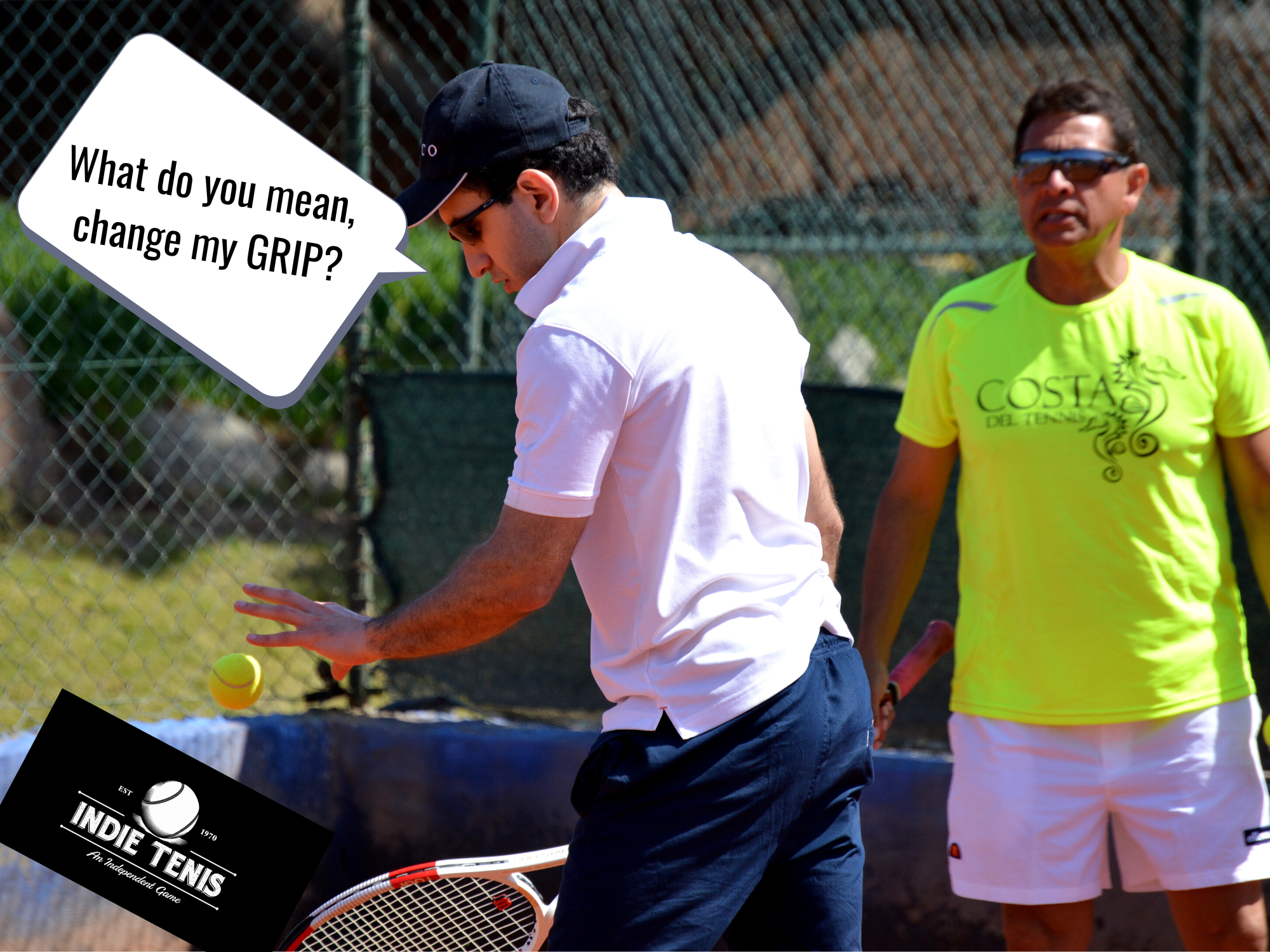
Why grips confuse beginners (and why they matter more than you think)
Start with two grips. The eastern forehand grip squares the racket face, so you can feel the ball and keep it in the court. The continental grip is used for serves, volleys and your two-handed backhand. It feels awkward at first, but learning it early keeps you from plateauing.
If you’re new to tennis, grips get talked about a lot — and usually in the most confusing way possible.
People throw around terms like continental, eastern, semi-western as if you’re supposed to already know what they mean. You nod, smile, maybe even copy what someone else is doing… and then wonder why the ball still isn’t going where you want it to.
Here’s the truth most adults don’t get told early enough:
Your grip largely decides whether you can rally — or spend your time walking around picking up balls.
And if you can’t rally, tennis stops feeling like tennis pretty quickly.
What a tennis grip actually is (and what it isn’t)
A tennis grip is simply where your hand sits on the racket handle’s 8 bevels when you hit the ball.
It is not:
Your grip size
Your over-grip or replacement grip
A cosmetic choice
Your playing grip controls:
The angle of the racket face
How the ball comes off the strings
How much margin you have over the net
Different shots require different grips — but beginners don’t need all of them.
They need the right few, learned properly.
The two grips every adult beginner should learn first
If you’re starting tennis as an adult, these two grips give you the fastest path to control and rallying:
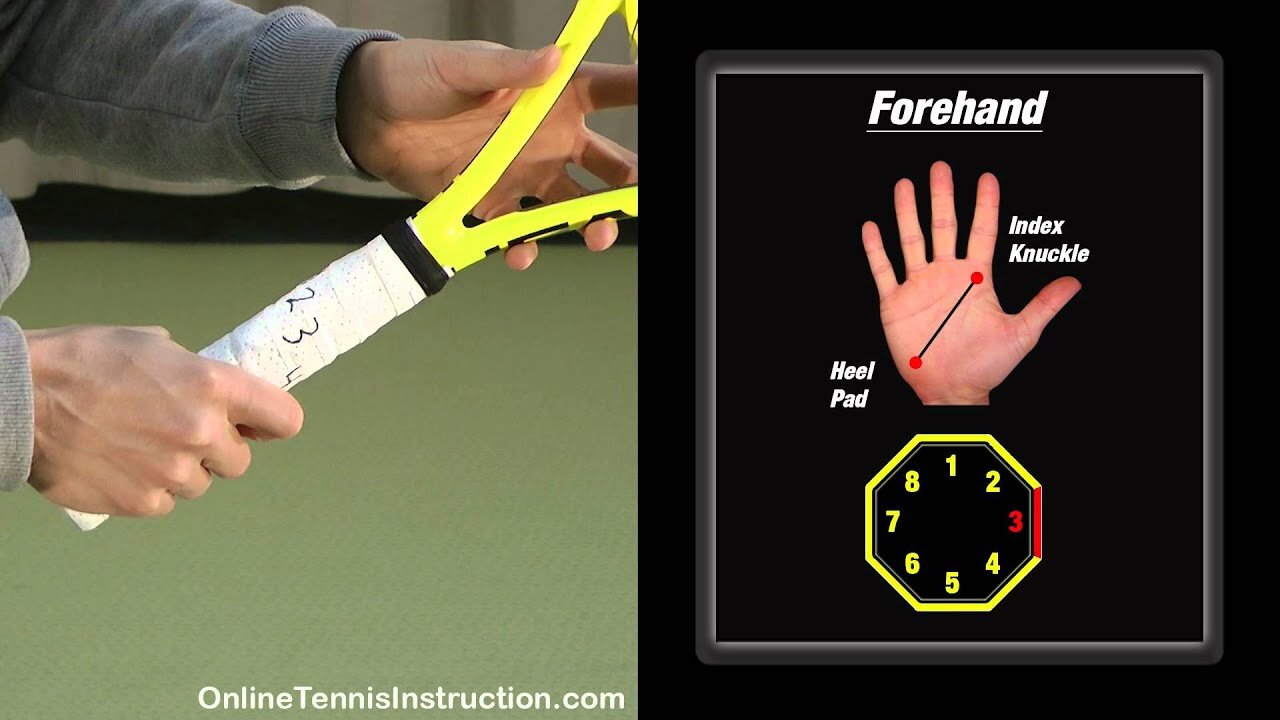
1. The Eastern Forehand Grip (your starting point)
This is where most adult beginners should begin.
Place the base knuckle of your index finger on bevel #3.
If it helps, write the bevel numbers on a white over-grip while you’re learning.
Why this grip works for adults
It’s comfortable
It helps square the racket face
It lets you hit through the ball instead of spinning it wildly
It builds confidence early
Most of the balls you hit will be forehands, so this grip matters more than most people realize.
This is the grip that helps adults start sending the ball into the court instead of chasing it.
Once your grip is set correctly, everything about your forehand becomes easier to repeat and control.
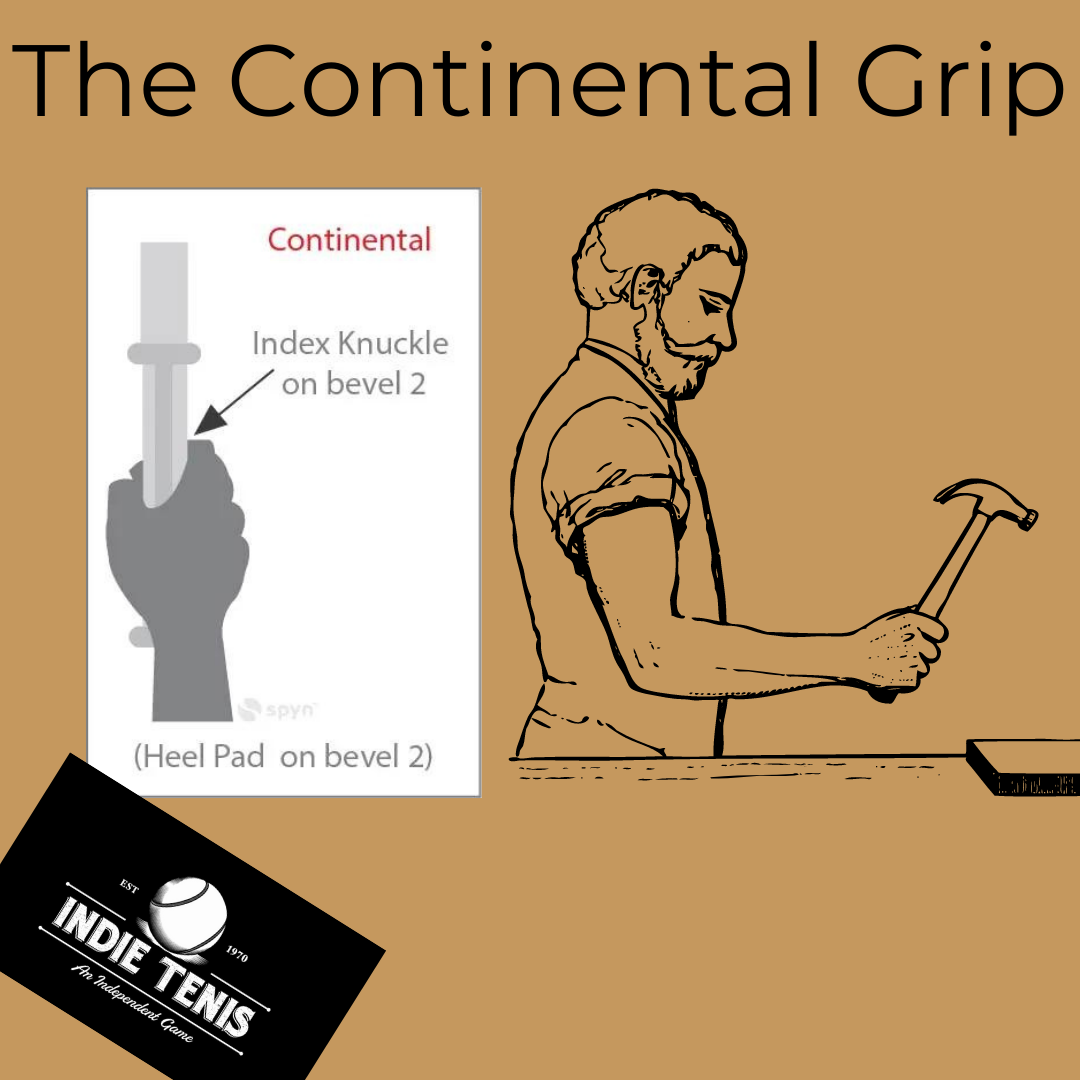
2. The Continental Grip (awkward at first, essential long-term)
This one feels strange. Everyone agrees on that.
Place the same base knuckle on bevel #2.
Some people call this the hammer or chopper grip — and yes, that description fits.
Here’s why I insist adults learn it early:
It’s required for volleys
It’s required for serves
It’s required for slices, drop shots, overheads
It opens the racket face naturally at the net
Most adults avoid it because it feels uncomfortable.
That avoidance is exactly what keeps them stuck later.
The continental grip on the backhand
On your two-handed backhand, your bottom hand holds the racket in continental while your top hand takes an eastern forehand grip. That combination lets you brush up the back of the ball to lift it over the net and add topspin. Here's why two hands are better for adult beginners.
Pros & cons (real talk)
Continental grip
Pros: Versatile, essential, unlocks net play and serving
Cons: Less topspin, less raw power at first
The trade-off is worth it.
Tennis without the continental grip gets very limiting — and honestly, a bit boring.
Switching grips: yes, you have time
A common fear beginners have is:
“I don’t have time to change grips between shots.”
You do.
Grip changes are small shifts between bevels, not big movements.
Once you start seeing the ball earlier, the change happens naturally.
It feels clumsy at first — then one day, you don’t think about it at all.
That’s normal learning.
The Continental Grip: Life will be boring without it
Continental grip used on the forehand and backhand volley
Why grips decide whether adults actually play tennis
Here’s the part most articles miss.
Adults don’t quit tennis because they lack motivation.
They quit because they never gain control.
And without control:
Rallying doesn’t happen
Points don’t happen
Tennis becomes an hour of interruptions instead of flow
Grips are one of the fastest ways to gain that control.
That’s also why group lessons alone rarely work long-term for beginners. They’re fun and social, but there’s not enough individual attention to fix grip issues early.
This is where private coaching becomes valuable — not as a luxury, but as a shortcut through the chaos phase.
If you’re starting to rally consistently and thinking about playing real club matches, here’s how we structure adult coaching weeks in Spain for club players ready to move beyond beginner basics.
As you improve
Start with:
Eastern forehand grip
Continental grip
That’s enough for a long time.
Later, when you’re ready to add topspin, the transition to a semi-western forehand grip is small and manageable.
Nothing feels as foreign as the continental did at first — and by then, you’ll already trust the process.
Before you overthink this
Take your grips seriously.
They affect everything:
Control
Confidence
Rallying
Enjoyment
Get them right early, and tennis becomes a game you play — not one you survive.
FAQ
What grip should a beginner use in tennis?
Start with the eastern forehand grip: place the base knuckle of your index finger on bevel 3. It squares the racket face, helps you feel the ball and keeps it in the court. Then learn the continental grip for serves, volleys and your backhand. Those two grips are enough for a long time.
How do you hold a tennis racket?
Hold the racket as if you're shaking hands with it, then check where the base knuckle of your index finger sits on the handle's eight bevels. Bevel 3 is the eastern forehand grip and bevel 2 is the continental. Keep your fingers relaxed, not tight, so the racket can move.
What is the continental grip used for?
The continental grip, bevel 2, is used for serves, volleys, overheads, slices and drop shots. It's also the bottom-hand grip on a two-handed backhand. It feels awkward at first, but it opens the racket face naturally at the net, and learning it early keeps you from plateauing.
Can you change grips fast enough during a rally?
Yes. A grip change is a small shift between bevels, not a big movement. It feels clumsy at first, but once you start seeing the ball earlier, it happens naturally. Begin with one forehand grip and the continental, and add changes as you improve.
I see this all the time on my adult tennis holidays in Mallorca:
players who never learned the continental grip can rally a little — but they plateau fast and feel it.
If you’re completely new to tennis or just getting started, structured academy group training like the Rafa Nadal Academy can be a strong fit.
Feel free to use our Partner Code : IndieTenis to save on your training programs + accommodations.
If you’re already playing matches — even if things feel inconsistent — and you want to understand why your shots break down under pressure, that’s where our small-group coaching weeks in Mallorca come in.
If you’re thinking about working with a coach, read this next:
How to Find the Right Tennis Coach for You
And tell me — are you using the continental grip yet?
With love from Mallorca,
Rhonda