
Adult Beginner Backhand: Why Two Hands Are Better Than One
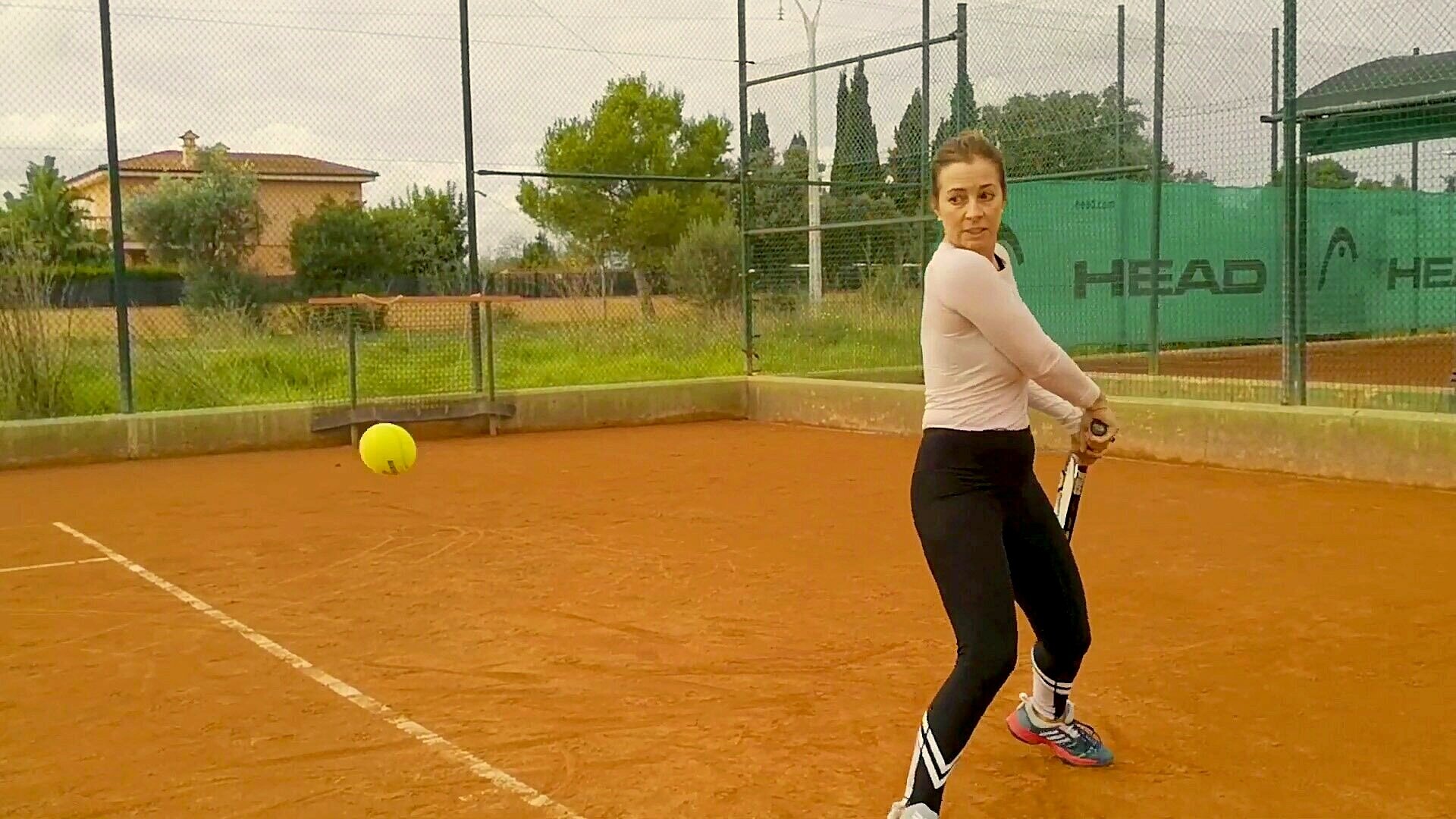
If you ask adult beginners which shot feels the most uncomfortable, the backhand usually wins.
It feels rushed.
Weak.
Late.
Unreliable.
A lot of adults assume the problem is coordination or strength. It’s usually neither.
The real issue is that most adult beginners start with a one-handed backhand before their body is ready for it.
New to tennis entirely? Start with our free adult beginner video course before working on your backhand.
The One-Handed Backhand Looks Simple — But It Isn’t
The one-handed backhand looks clean and elegant. That’s part of the problem.
What you don’t see is how demanding it is:
Precise timing
Strong shoulder and forearm control
Excellent spacing
Confidence hitting through the ball
Most adult beginners don’t have those pieces yet — and that’s normal.
Starting with a one-handed backhand often leads to:
Late contact
Scooping the ball
Arm-only swings
Inconsistent depth
Players end up muscling the shot instead of swinging freely.
Why Two Hands Change Everything for Adult Beginners
The two-handed backhand gives adult players something they desperately need early on: stability.
With two hands:
The racket face stays more controlled
The body helps the swing
Timing becomes easier
Contact happens more consistently in front
You’re not fighting the racket. You’re guiding it.
This doesn’t mean the two-handed backhand is “better” forever. It means it’s better for learning.
When your backhand becomes reliable in rallies, the next phase is learning how to use it in live match situations. That’s exactly what we focus on during our adult tennis camps in Spain.
Control First. Power Later.
Most adult beginners want power. What they actually need is control.
The two-handed backhand naturally:
Shortens the swing
Reduces unnecessary movement
Encourages better rotation
As control improves, power shows up on its own. Not forced. Not rushed.
This is especially important for adults who didn’t grow up playing tennis. Your body needs time to understand the movement.
Once players understand how the body works on the backhand side, it becomes much easier to see why mastering the forehand fundamentals matters just as much.
The Confidence Factor Matters More Than You Think

Here’s something people underestimate:
When a player trusts their backhand, their entire game loosens up.
They stop:
Running around everything
Overusing the forehand
Panicking in rallies
Two hands give beginners confidence sooner. Confidence keeps people playing.
That matters.
Common Concern: “But I Want to Learn the One-Hander Eventually”
That’s fine.
Starting with two hands doesn’t lock you into anything. It gives you a foundation.
Once:
Your timing improves
Your spacing gets cleaner
Your footwork settles
You can explore a one-handed backhand later if it truly fits your game.
Learning tennis is not about choosing the “final version” of every stroke on day one. It’s about choosing what helps you improve now.
This is another example of why starting with the basic tennis fundamentals matters — the right foundation makes every stroke easier to learn.
A Simple Practice Focus for the Two-Handed Backhand
If you’re working on this shot, focus on:
Turning your shoulders early
Letting your body rotate the racket
Making contact in front
Finishing balanced
Don’t rush the swing. Let the ball come to you.
The goal early on is not perfection — it’s repeatability.
The Bigger Picture
Adult beginners don’t fail at tennis because they lack talent. They struggle because they start with tools that are too demanding too early.
The two-handed backhand gives you room to learn, adjust, and grow without fighting your own body.
That’s why, for most adult beginners, two hands simply make more sense.
In the image above, Jofre Porta above opens his front foot . See how it’s slightly open? It allows him to contact and turn into the ball and court, easier.
With love from Mallorca~